
Awareness has been growing around the distressing state of one of our region’s most important freshwater habitats – the chalk streams. With around 85% of the global habitat occurring in the UK, and most in the south of England, these amazing waterways have been garnering a lot of attention due to very low flows, and in some cases their complete disappearance.
In Cambridgeshire, our chalk streams are fed by aquifers – permeable rock that holds rainfall which has seeped into the ground – and are also used to provide drinking water for much of the population. The chalk streams provide precious habitat for iconic species including water voles, kingfishers and brown trout, and are vital tributaries of the River Cam, which has recently seen its lowest flow on record for this May, and, according to figures released by the Environment Agency, was at just 33% of its average flow in July.
Currently, only 11 out of 220 British chalk streams have any legal protections, and even these fall short of the measures needed to defend these rivers.
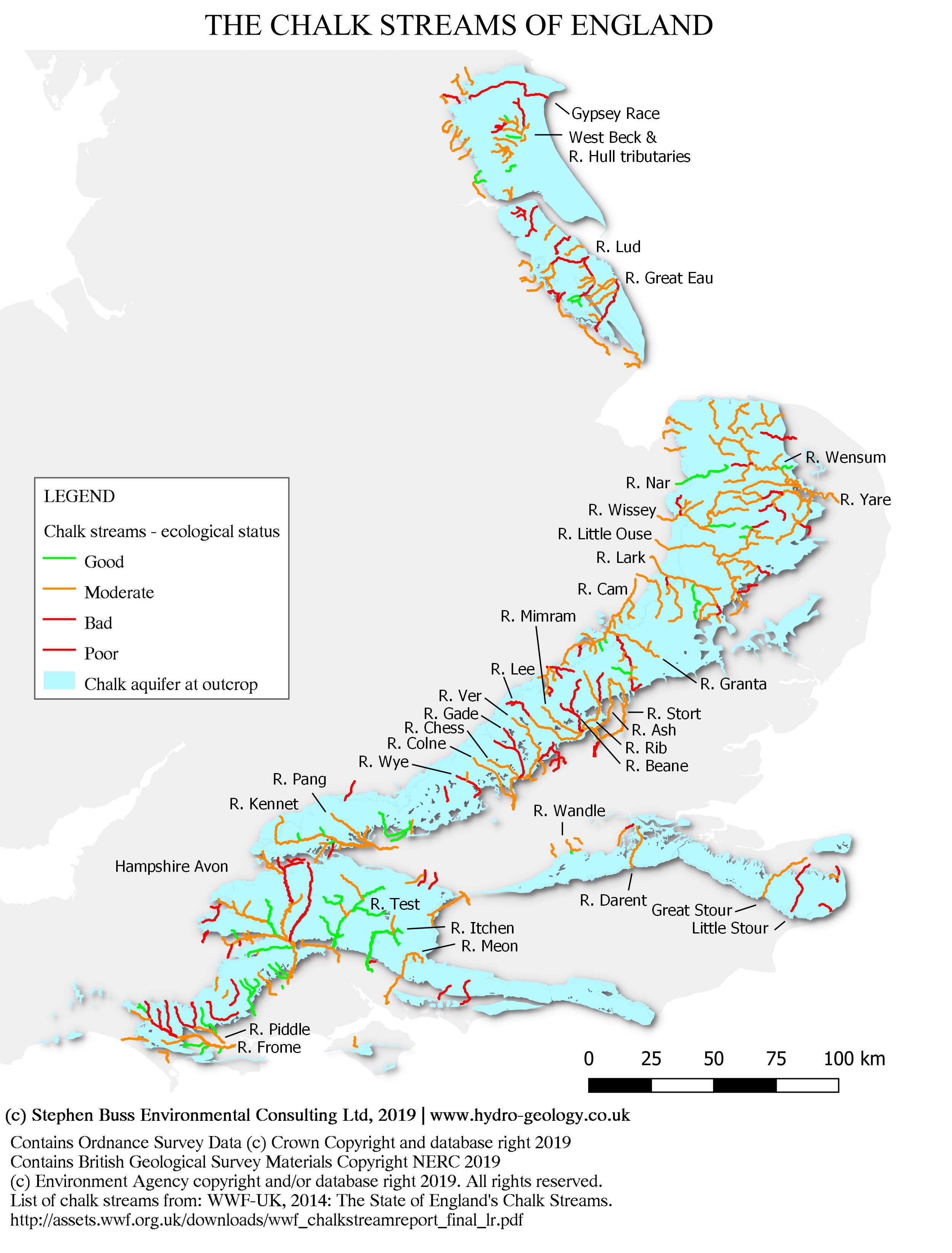
Map of Chalk Streams in England and their Ecological Status
Planning & Infrastructure Bill
The Bill will speed up and streamline the delivery of new homes and critical infrastructure, supporting delivery of the government’s Plan for Change milestones of building 1.5 million homes in England and fast-tracking 150 planning decisions on major economic infrastructure projects by the end of this Parliament. It will also support delivery of the government’s Clean Power 2030 target by ensuring that key clean energy projects are built as quickly as possible.
Part 3 of the Planning & Infrastructure Bill introduces a new system where environmental impacts of development in some locations could seek to be addressed through Environmental Delivery Plans (EDPs) – a new, untested system that would replace many site-by-site nature protections with strategic, landscape-scale planning. This new system would require developers to pay into a nature restoration fund rather than follow current environmental obligations to protect rare habitats and species. Under the bill, the payment into the fund would allow developers to begin work immediately while the money is used to improve nature, potentially in another region of the country.
Critics of the Bill point out that this strategic mitigation does not work for such a rare habitat as a chalk stream, which is impossible to recreate elsewhere.
However, as of 28th October, the House of Lords have backed the amendment for the greater protection of chalk streams. This is a big opportunity for the government to move forward with strong measures to make sure these globally important rivers are properly protected as the government delivers its growth agenda.
Once it has completed its stages in the House of Lords, the Bill goes back to the Commons where the changes made in the House of Lords are reviewed. The government can reject those changes at that point. Now is the time to write to your MP and ask them to support the chalk stream amendment.
The Bill’s supporters claim that strong environmental rules hold back growth. This is simply not true. In fact, it’s the opposite. Healthy ecosystems underpin our economy, our health, and our future resilience. Weakening those protections doesn’t speed up growth, it sabotages it. The UK’s most ambitious house-building years, between 2002 and 2007, happened under the existing Habitats Regulations. Nature wasn’t the problem then, and it isn’t now.